Polish citizenship is not just a formal status, but also a gateway to enjoying full rights and privileges in Poland and the entire European Union. Every Polish citizen has guaranteed access to legal protection, work, education, and travel without additional restrictions. This is why so many foreigners today seek to obtain Polish citizenship, considering it an important step in building their lives in our country. Possessing a document confirming Polish citizenship offers numerous benefits – from the right to vote, residence stabilization to easier movement within Europe. A person who holds Polish citizenship becomes part of the national community and can fully enjoy the rights of Polish residents. In the following sections, we will describe in detail the paths leading to obtaining ‘Polish citizen’ status, the conditions that must be met, and the formalities required to successfully obtain Polish citizenship. Thanks to this guide, you will learn not only what citizenship is but also why it is worth having.
Obtaining Polish citizenship
Paths to acquiring citizenship
There are several ways to obtain Polish citizenship. Most often, this process is based on legal principles, such as acquisition of citizenship by birth, or through special procedures, such as recognition or granting by the President of the Republic of Poland. As a rule, a child acquires Polish citizenship if at least one of their parents holds this status. This is known as ‘theright of blood’ (‘ius sanguinis’), which plays a key role in Poland. This means that even if a child is born outside the country, they automatically acquire Polish citizenship. It is also worth remembering that in certain situations, Polish citizenship can also be obtained for children through appropriate official decisions, such as adoption or at the request of foreign parents who have themselves been recognized as Polish citizens. This ensures that the regulations also protect children and allow them to enjoy the same rights as other citizens.
Minors and children under 18 years of age
The issue of citizenship is particularly important for young people. If a minor appears in the family, the regulations specify precisely how they acquire civil rights. The rule is that children under 18 years of age follow the legal status of their parents.
If parents with Polish citizenship have a child, a child automatically becomes a citizen of our country – regardless of place of birth. The situation is slightly more complex when a minor foreigner is involved. In such a case, their status is determined by legal provisions and administrative decisions, e.g. when a parent is recognized as a Polish citizen.
Importantly, the regulations also provide solutions for mixed situations – when only one of parents has Polish citizenship. It is then that parents of a minor Polish citizen can apply for a child to be also granted the same status. Thanks to this, the legislator ensures legal consistency and safety for the entire family.
There are two fundamental principles in citizenship law: ‘Ius Soli’ (‘the law of soil’) and ‘Ius Sanguinis’ (‘the law of blood’). In Poland, the latter is the dominant principle, meaning that a Polish citizen transfers their citizenship onto a child regardless of their place of birth. If parents live abroad and a child is born there, a minor automatically acquires Polish status. ‘Ius Soli’, on the other hand, is applied only to a limited extent – for example, when a child is born in Poland to unknown parents, stateless persons, or their citizenship cannot be determined. In such cases, the law protects the child from being left without a nationality. It is worth noting that thanks to the ‘Ius Sanguinis’ principle, a foreigner who holds Polish citizenship through their parents or grandparents can also regain full rights in Poland, even if they were born abroad. This solution allows for the maintenance of strong ties with the Polish national community worldwide.
Documents in civil status records
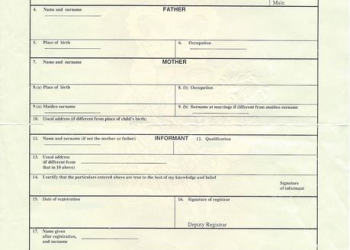
The basis for confirmation of citizenship are the provisions in Polish civil status records. This is where the most important events are recorded, such as births, marriages or deaths, which can be relevant when determining citizenship status.
The data included in the Polish civil status records play a key role in official procedures – they are necessary when submitting applications for recognition as a Polish citizen, restoring citizenship or issuing a Polish passport. Thanks to them, offices can clearly confirm the identity and state affiliation of a person.
That is why it is so important that all civil status acts are properly prepared and registered. In the case of people who are born or married outside the country, it may be necessary to transcribe a foreign act to Polish civil records, which allows you to use full civil rights later.
Granting citizenship by the President of the Republic of Poland
Decision of the President of Poland
One of the unique ways to grant Polish citizenship is through a decision made directly by the President of the Republic of Poland. This is a discretionary measure, meaning that the head of state is not bound by any rigid legal requirements and can grant citizenship to a foreigner even if they do not meet standard criteria. In practice, such a decision to grant citizenship is made in special situations, for example, when a person has made significant contributions to Poland, works for the country abroad, or makes a significant contribution to the development of science, culture, or the economy. It is worth remembering that this procedure does not guarantee a positive outcome – refusal of citizenship is also possible, of which a foreigner is officially notified. For this reason, this procedure is often considered an additional path, rather than a standard method of obtaining citizenship.
Appeals procedure and the Act on Citizenship
The entire process of obtaining citizenship is regulated by the Act on Polish Citizenship. It determines who can be recognized as a citizen and under what conditions, what the application procedure is like, and what rights and obligations result from granting this status.
If a negative decision is received during the proceedings, an appeals procedure is possible. This means that a person concerned can re-present his situation and arguments, demanding that the case be reconsidered by the competent authority.
Thanks to this, foreigners who want to obtain a passport and legal status in Poland have a real tool to defend their rights. The issue of Polish citizenship is a key life stage for many people, which is why the regulations provide for additional protection measures in the form of appeals and complaints. This ensures greater fairness and transparency of the procedure.
Recognition as a Polish citizen
Polish citizenship for a foreigner
For many foreigners, one of the most frequently chosen methods for recognition as a Polish citizen is the administrative procedure specifically designed for foreigners. In practice, this means that a person who meets the requirements – including permanent residence and language skills – can submit an application and wait for the Voivodeship Office’s decision.
This type of procedure is commonly referred to as ‘foreigner recognition’. During the procedure, the Voivodeship Office examines whether the individual meets all legal requirements, such as whether they have resided in Poland continuously for a specified period, whether they have legal residence status, and whether they are integrating into the local community.
Each case of ‘foreigner recognition’ is considered individually, allowing for consideration of various life circumstances. It is worth noting that in recent years, an increasing number of foreigners have been choosing this form of legalization. It is through this procedure that foreigners most often receive citizenship, and the entire procedure is described in detail in the Act on Citizenship.
To begin the procedure, a formal application from a foreigner is required, which is submitted to the appropriate Voivodeship Office. The document must include personal data, information about their stay in Poland, and the required attachments. Only on this basis can a decision on recognition be made and a citizenship certificate issued.
Residency requirements
To increase the chances of being recognized, the office primarily verifies the status and continuity of residence. Key factors here include the conditions for a foreigner residing continuously in Poland and the situation of a foreigner residing legally under appropriate permits.
Permanent residence is one of the strongest foundations for legal settlement. A person with this status typically meets the integration and stability criteria (work, family, housing), which positively impacts the citizenship decision. Permanent residence rights(after five years of legal residence in Poland) confirm rootedness and self-sufficiency. This is a strong argument in recognition proceedings, demonstrating lasting ties to Poland.
Resident residence(in practice: stable, long-term residence with work/family) indicates a real center of life in the country. The office assesses, among other things, sources of income, the absence of interruptions in the legality of residence, and compliance with the law.
Long-term European Union resident residence is the status that is similar in nature to permanent residence for third-country nationals. It confirms long-term, uninterrupted legal residence, integration, and economic stability – elements particularly important for recognition as a Polish citizen.
Restoration of Polish citizenship
For Polish emigrants
A special procedure is also provided for individuals who have previously lost their rights. Restoration of Polish citizenship primarily applies to those who, for various reasons, had to renounce their citizenship or were deprived of it under previous regulations.
Thanks to legal changes, it is now possible to regain Polish citizenship and regain full citizenship rights. This solution is of great importance for individuals who have lived abroad for many years but still wish to maintain ties with their homeland.
In practice, Polish emigrants can apply to the appropriate authorities for the restoration of their status. Upon a positive review, they receive an administrative decision and, as a result, their Polish citizenship is restored. This paves the way for, among other things, obtaining a passport, exercising their civil rights in Poland, and easier settlement in the country after years spent abroad.
Loss and renunciation of citizenship
Although most procedures focus on how to obtain citizenship, it is worth remembering that renunciation of Polish citizenship is also possible. This option is typically chosen by individuals wishing to acquire citizenship in another country, as its regulations do not permit dual citizenship.
Polish law does not allow for a situation in which an office itself decides to devoid someone of their citizenship status. Therefore, loss of citizenship cannot be experienced against one’s will – the only way is to consciously submit an application to the President of the Republic of Poland for permission to renounce this right.
It is important that such a decision is well-considered, as it results in the loss of all rights a citizen is entitled to, including the right to a Polish passport and state protection. Therefore, in practice, relatively few people choose this step.
Polish citizenship through marriage and adoption
Spouses of Polish citizens
One common way to obtain status in Poland is through the procedure provided for married individuals. Polish citizenship through marriage can be granted to a foreigner who has entered into a marriage with a Polish passport holder and meets certain residence requirements.
The law stipulates that spouses of Polish citizens may apply for citizenship recognition after several years of continuous and legal residence in Poland. Stable family life and residence with a spouse within the territory of the Republic of Poland are also crucial.
This solution allows families living in Poland to fully integrate legally and socially. A foreigner who obtains citizenship through marriage gains not only voting rights and a passport but also a sense of security and the ability to enjoy the full benefits of Polish citizens.
Full adoption
Another way of acquiring citizenship is full adoption, which applies primarily to children. If a foreign child is adopted in this mode by a person with Polish citizenship, they automatically gain the same status as adoptive parents’ biological children.
This means that when the court decides on adoption, a minor foreigner with Polish citizenship gains full rights as if they had been born into a Polish family. Therefore, there is no need to conduct additional procedures for recognizing or granting citizenship – everything is done by operation of law.
This solution not only simplifies formalities, but also guarantees the child’s safety and legal certainty, and allows the family to fully benefit from their common citizenship status.
Application for Polish citizenship
What documents are needed?
The procedure for granting Polish citizenship always involves formalities. The most important step is an application for Polish citizenship, which is submitted to the relevant administrative body.
In practice, there are several options: a foreigner can prepare an application for citizenship, and if they meet the criteria for recognition, they can submit the appropriate form as a foreigner’s application. In each case, a complete set of attachments and confirmation of personal data accuracy are required.
A petitioner – whether a foreigner or Polish – submits a written application, usually through the voivode or consul. To successfully submit an application, it is necessary to prepare a set of basic attachments. The most important include: documents for the citizenship application, such as a Birth Certificate, documents confirming legal residence in Poland, a Certificate of no Criminal Record, photographs, and proof of payment of the stamp duty.
A well-prepared application, along with a complete set of documents, significantly accelerates the process and increases the chances of a positive decision on citizenship.
Confirmation of Polish citizenship
Not every case requires granting or recognition – sometimes it is enough to prove that a person already holds Polish citizenship.
In such situations, documents confirming Polish citizenship are crucial, and must be presented at the office. These documents most often include Birth Certificates, Marriage Certificates, or other records in state registers. Based on these, the office issues an administrative decision officially confirming Polish citizenship.
This allows an applicant to later apply for a passport, ID card, or other official documents. The issued decision clearly confirms Polish citizenship and resolves any doubts that may have arisen, for example, in the case of individuals born abroad or children of emigrants.
Where to submit an application?
The place where the documents are submitted depends on the applicant’s situation. If the procedure is conducted in the country, the appropriate authority is the Polish Civil Registry Office or the Voivodeship Office that deals with civil matters. It is in such institutions that applications for the recognition or restoration of citizenship are most often considered.
In some cases, another Polish office will be competent – especially when it comes to special proceedings requiring central decisions. In such cases, supervision is exercised by the Ministry of Interior and Administration, which is responsible for issuing decisions regarding citizenship.
In turn, people living outside the country can use the help of the Polish diplomatic mission. The Polish consul accepts applications and sends them to Poland, thanks to which emigrants also have the opportunity to start the procedure without having to come to the country.
What documents and fees are needed?
Documents and their translations
In the citizenship application process, it is crucial to document compliance with all formal requirements. One key element is Polish language proficiency, which confirms the foreigner’s integration into Polish society.
Most often, an official certificate is required – a Polish language proficiency certificate, issued after passing a state exam. This document is included in an application as one of basic attachments.
Additionally, some foreigners must prepare Foreign Birth and Marriage Certificates, as well as Certificates of no Criminal Record. In such cases, their translation into Polish by a sworn translator is required. This ensures that all documents have official validity and can serve as the basis for a decision on granting citizenship.
Procedure costs
Obtaining citizenship also involves administrative costs. The primary expense is the stamp duty, which must be paid upon submitting an application. Its amount depends on the type of procedure – different rates apply for recognition, confirmation, and granting citizenship by the President of the Republic of Poland. Proof of payment is a mandatory attachment to the documents.
It is also worth mentioning the situation of individuals with the Polish Card. Although the card itself does not grant citizenship, it significantly simplifies and accelerates the process. Importantly, foreigners with the Polish Card are often exempt from some formalities, and the costs associated with their case are often lower compared to other procedures.
These solutions make the procedure more accessible to those who can prove their ties to Poland and wish to legalize their permanent residence through citizenship.
Polish language proficiency as a condition
Language Certificate
One of the requirements that foreigners applying for citizenship must meet is documented knowledge of Polish language. The law requires that a candidate be able to use Polish sufficiently to enable them to function in everyday life, work, and communicate in public offices.
The most recognized proof is a state certificate of Polish language proficiency. It is issued after passing an exam organized by authorized institutions, and its possession is a key attachment to an application for recognition or citizenship.
This ensures that a foreigner not only lives in Poland but also actively participates in social life and is able to fully exercise the rights of citizens. This document is often crucial to a positive decision.
Foreigners who apply for Polish citizenship have an obligation to know Polish
Polish law explicitly requires Polish language proficiency for those seeking citizenship. This means that the office not only evaluates documents but also requires proof of communication skills.
In practice, each application is reviewed to ensure the foreigner’s integration into Polish society. If a foreigner lacks the appropriate documentation or is unable to communicate fluently, the procedure may end in rejection. Therefore, it is crucial to ensure that the foreigner’s Polish language skills are learned and documented in advance.
This requirement is not merely a formality; it aims to facilitate foreigners’ functioning in Poland, so that they can fully enjoy the rights and obligations of citizenship. As a result, the naturalization process fosters better social and cultural integration.
How long does the process take?
Applicants often ask how long the citizenship process takes. Unfortunately, there is no single, universal answer – the waiting time depends on the type of procedure (recognition, granting, restoration, or confirmation) and the completeness of the submitted documents.
Polish citizenship cases are typically processed within several months, although in practice, proceedings can last over a year. The number of applications submitted to offices and the need to verify data across multiple institutions are significant factors.
Regulations also stipulate a specific deadline for processing an application, but in exceptional circumstances, this deadline may be extended. Therefore, it is crucial to carefully prepare an application – missing or incorrectly prepared documents can significantly prolong the entire procedure.
Can you lose Polish citizenship?
Polish law protects its citizens – in practice, there is no possibility of forced loss of citizenship by a decision of the office or other body. A Polish citizen cannot be deprived of this status against their will.
The only solution provided for by law is voluntary renunciation of Polish citizenship. To do so, one must submit an appropriate application to the President of the Republic of Poland and obtain his consent. Only the issuance of a decision results in the loss of citizenship status. Such cases are relatively rare and most often concern individuals wishing to acquire citizenship of another country where the law does not allow dual citizenship.
However, it is important to remember that this is a serious and irreversible decision, which entails the loss of all rights derived from holding a Polish passport.
Benefits from having a Polish passport
Receiving a Polish passport
One of the most expected effects of granting citizenship is the ability to obtain a travel document. A Polish passport is not only proof of nationality, but also the key to free movement around Europe and many countries around the world.
Obtaining a Polish passport takes place following completing the citizenship procedure and confirming your citizenship status. The holder of the document can travel without visas in the Schengen area, use consular protection abroad and take part in elections and referenda in Poland.
Additionally, a Polish passport opens the way to full social and professional integration. This is a document that for many foreigners becomes a symbol of stability and a sense of security, and for people of Polish origin – a confirmation of the bond with the country of their ancestors.
Why is it worth having Polish citizenship?
Having Polish citizenship is not just a formality, but a real convenience in everyday life. One of the most important advantages is the benefit of possessing a Polish passport – a document that opens the door to free travel within the European Union and many countries around the world.
Those who obtain Polish citizenship gain the right to vote in elections, access to social benefits, healthcare, and education on equal terms with Polish citizens. It also provides a greater sense of stability and security, both at home and abroad.
Every Polish citizen with Polish citizenship also benefits from diplomatic and consular protection – in the event of problems abroad, they can count on the support of Polish diplomatic missions. This privilege often proves invaluable in difficult life situations.
Therefore, acquiring citizenship is an investment in the future – it grants freedom, security, and full civil rights, and for many foreigners, it also fulfills the dream of being part of the Polish national community.
Legal assistance in the process of obtaining citizenship
Procedures for granting Polish citizenship can be complex, so in many cases, professional legal assistance is invaluable. A lawyer or immigration advisor can explain the regulations, help prepare documents, and ensure the application is submitted correctly.
In more complex cases, such as ‘foreign recognition’, specialist support can help avoid formal errors that could prolong the procedure or lead to refusal. Translation of documents by a sworn translator is often necessary, as this is a formal requirement for documents issued abroad.
Applications for citizenship are accepted by various institutions – from the Polish Registry Office, where Birth and Marriage Certificates are registered, to the relevant Polish Voivodeship Office, and in the case of emigrants, the consulate. Professional support helps determine which institution to refer the case to and what attachments to prepare to ensure a smooth procedure.
Summary – who can obtain Polish citizenship?
Finally, it is worth answering a key question: who can obtain Polish citizenship? Poland offers several different paths – from acquisition at birth by operation of law, through recognition or restoration, to granting it by decision of the President of the Republic of Poland.
Anyone considering how to obtain Polish citizenship should first verify whether they meet the criteria specified in the law: legal and uninterrupted residence, language skills, a stable source of income, and family ties. For children and adopted individuals, the procedure is simpler – in many cases, citizenship is granted automatically.
Anyone who completes the formalities and receives a positive decision becomes a full Polish citizen. This means the ability to exercise full civil rights, free travel, and a sense of belonging to the national community. Polish citizenship is not just a document but real support and privileges that significantly facilitate life in Poland and abroad.
Do you want to translate Civil Status Certificates, School Certificates, car documents and driver’s licenses or other documents issued by the state organs?
We use essential cookies to make this website work. With your consent, we may also use analytics, marketing and preference cookies to improve the website, measure performance and personalize content or advertising.