studying abroad in Italy

Étudier en Italie
Studies in Italy

Italy – home of fine cuisine, fashion and art and is synonymous with good weather, fun and a unique laid-back attitude. While on holiday in Italy, watching videos or photos on Instagram, we wonder what it would be like to live in such the paradise. The first thought appears, then the second, third, fourth and we are already thinking about moving to the Apennine Peninsula. Some plan to move when they retire, others when they are in their forties… How about starting a degree course there? A lifelong adventure, international friends and great fun – why not? So if you are considering studying in Italy, this post is for you 🙂 We will try to explain the procedures needed to start your studies and what you need to expect there.

Please note – you can find the exact recruitment information on the website of your dream university. Recruitment may look different depending on the city and the course. Therefore, before you start your university application, make sure you know everything 🙂

That is right – before you go to Italy, find your dream university and find out what you need to do to start your studies there. Do not worry if you do not speak Italian – many Italian universities offer the opportunity to study in English. However, it would be a good idea for you to try to learn at least the basics of the language – you will feel much more confident then. Once you have found your dream university, go to its website and see exactly what the admission procedures are. It is this website that will be your guide to show you what you need to prepare.

Documents neede to study abroad

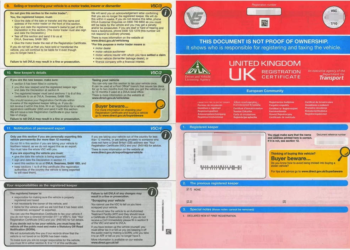
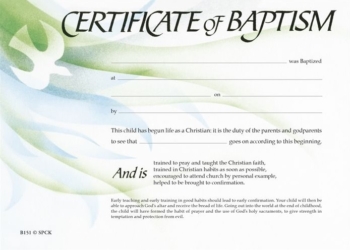
Many documents will need to be translated in order to study abroad. The main documents required by the foreign university will be the translation of your school-leaving certificate and birth certificate. In some cases, translations of documents such as Income Certificates may also be required. Be sure to check whether you will need to have your documents legalised and read the article ‘How to get documents legalised in Poland’.

Find out how much the translation of individual documents will cost you. To do this, click on the buttons below and search for the country in which you want to study.

If your country is not on the list, you can go directly to the contact form and send us the photo or scan of the document to order free quotation.

Świadectwa maturalne
zaświadczenie o stanie cywilnym
Legalizacja dokumentów

What is it like to study in Italy?

After the first and second degree programmes, you can take at least one year of specialised studies, after which you will be awarded the title Master di 1° Livello or Master di 2° Livello. In a similar way, you finish your studies in the fine arts, but you receive the different diploma: Diploma Accademico di 1° Livello (Bachelor’s  degree) and Diploma Accademico di 2° Livello (Master’s degree).

Unified studies such as medicine, dentistry or veterinary medicine last 5-6 years and at the end of them you receive the diploma for both the first and the second degree (the so-called Ciclo Unico – Corsi di Laurea Specialistica/Corsi di Laurea Magistrale).

The academic year is divided into 2 semesters: winter and summer, each ending with examination sessions. What distinguishes the Italian and Polish sessions are the examinations. If you want to study in Italy, be prepared that they will almost always be oral! However, this is not so difficult and after some time you can get used to them and even like them 🙂

Universities in Italy

If you still haven’t chosen your dream Italian university, and you already know which region you want to venture in, on this page: https://www.studenti.it/universita-statali-italia-guida.html you will find Italian universities divided by region.

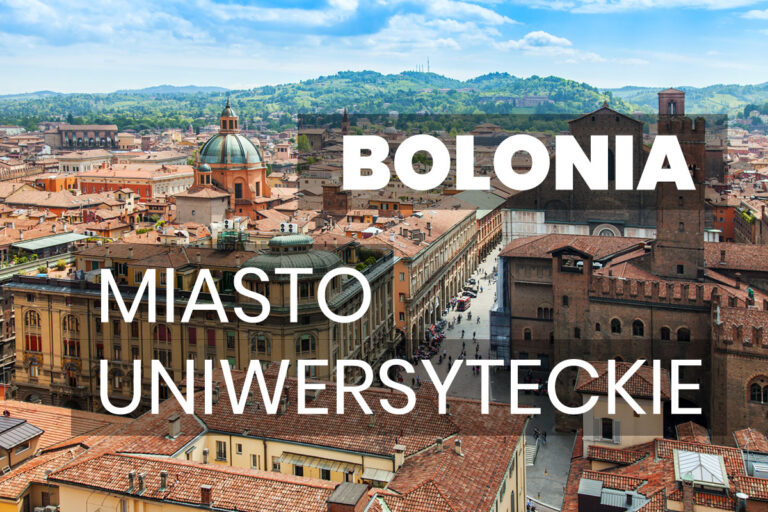
If you have already chosen your dream university, be sure to check the website to see what courses it offers. On the University of Bologna website, you will even find a special section prepared for foreigners (https://www.unibo.it/it/studenti-internazionali), which will help you with your course choice and the admission process. There is even a special video that shows step by step, but unfortunately I only found it in Italian. However, you can translate the whole site into English and then we can manage even without it 🙂

Universities in Italy provide information about the recruitment process for foreigners. Sometimes, however, there is no distinction between EU and non-EU students. In this case, it is best to contact the university directly and ask for details. As far as I know, however, students from the European Union often have he same recruitment rules (at least at its initial stage) as the Italian ones.

I've already got my dream studies - what's next?

Once you know exactly what you want to study, find out what else you need to do. When you read the description of studies, you should find not only the annual timetable, but also the exact admission rules.

Many universities have an entrance exam, which has a big influence on whether you will start your studies. Remember to register for it in good time and to write it (find out if you can do this online or if you have to be there).

However, you don’t always have to write it at all! You may find that if you meet the requirements, you will get into university without an exam. However, this does not apply to first degree students – if you are applying for such the higher degree, be prepared that you will have to take it.

Do you have to take language exams?

Some universities assume that if you want to study in Italian, you must know the language. Others don’t necessarily, but you often have to prove your knowledge of the language in the special exam organised by the university.

Sometimes CILS (Certificazione di Italiano come Lingua Straniera) or PLIDA (Progetto Lingua Italiana Dante Alighieri) examinations are recognisable, which certify knowledge of the Italian language at the certain level. The Italian Cultural Institute, for example, which has offices in Warsaw and Crakow, can help you prepare for these examinations.

If you decide to study in English, you may also be required to pass IELTS or TOEFL exams.

If you decide to study for a Master’s degree in Italy, you will have to earn the certain number of CFU (or our ECTS) points during your undergraduate studies in Poland, in addition to the Baccalaureate.

There is bound to be the point converter on the website of your chosen university. If you are even a few points short, don’t give up, just write to the university and ask what you need to do. In this case, some universities require you to take additional exams, for which in some cases you will have to pay extra.


Italy: studying - the documents required to start your studies

What documents are required at Italian universities?

  1. Baccalaureate Certificate – must be certified at the District Examination Board (sometimes even for Master’s studies).
  2. Graduation Diploma – only if you are applying for Master’s studies or Doctoral studies. This document also needs to be authenticated, this is handled by the National Agency for Academic Exchange, or NAWA. NAWA also takes care of the apostille, i.e. the certification that the document can be used abroad.
  3. The translated Baccalaureate Certificate, Bachelor’s or Master’s degree and their Apostille. In the case of Bachelor’s degree, the Apostille can be issued by NAWA. Some sworn translators also offer the possibility of simultaneously translating documents, providing the apostille and the Dichiarazione di Valore, i.e. it is worth waiting for several days. 
  4. The Apostille

Remember that  before going to the Italian Embassy, you  have to prepare two copies of those translated documents. The Italian Embassy issues the Apostille i Dichiarazione di valore as the Declaration of Value. 

Apostille – make sure you need one in every case. You may find that it is not necessary according to your university’s requirements.

Once you have all the required documents, you must keep an eye on the deadlines given by your university. Also bear in mind that, as with your enrolment in Poland, you will probably have to pay the matriculation fee, take care of 2 (most likely) photos and your residence documents.

Bolonia uniwersytet studia we Włoszech koszty uczelnie we Włoszech Włochy studia
Italy - studies

Studying in Italy - costs

As you start your student life in Italy, do not forget to complete a few formalities related to your stay.

As a student, i.e. someone who has been in Italy for more than 3 months, you must remember to register. During the first eight working days of your stay, you must go to the police station (Questura) corresponding to your Italian place of residence and complete the application for a residence permit for studies (Richiesta di permesso di soggiorno per STUDIO). To obtain it, you must bring with you documents proving not only your studies at the Italian university, but also your financial security (minimum EUR 459.83 (USD 477,86) per month, or EUR 5,977.79 (USD 6, 212.12 per year).

Why?

The clerk needs to be sure that you have the money to support yourself in Italy and that you will not be on social assistance. An insurance policy in case of illness (for example, an EHIC Card) will also be useful.
For a start, also make the Codice fiscale. The Codice fiscale is the equivalent of the Polish PESEL number. You can obtain it at the offices of the Agenzia delle Entrate (Italian Tax Agency) or even at the Embassy of the Italian Republic in Poland. To obtain it, you must have with you an identity document: passport or Identity Card.

Once you have your Codice fiscale, you can register. To do this, you must go to the Ufficio Anagrafe del Comune (Civil Registration Office) and ask to be entered in the population register (Iscrizione Anagrafica). You will need to bring with you: a Codice fiscale, a valid identity document, the certificate confirming enrolment in a study/course, health insurance and the Statement of Means of Subsistence.

Online Sources:

http://naszswiat.net/ 
https://www.gov.pl/
https://naszswiat.it/

Studying in Italy - costs

Studying in Italy is unfortunately charged. However, the good news is that the amount of the fee is not fixed, but depends on your wealth. Sometimes it is even possible to be completely exempted from this fee.

All you have to do is apply for an ISEE (Indicatore della Situazione Economica Equivalente – indicator of equivalent financial situation). This certificate allows us to obtain a discount not only on fees for studies, kindergarten or nursery, but also, for example, on school lunches or certain medical treatments.
To begin, you will need to fill in the DSU (Dichiarazione Sostitutiva Unica) Declaration, which you can find at the CAF (Centri di Assistenza Locale) offices or at l’INPS. There you will find out what documents you need to obtain the settlement (usually it will be a certificate of earnings or annual tax declaration, rental contracts, property ownership, etc.).

All documents should be translated into Italian. Sometimes, however, this can be circumvented by the courtesy of the officials and simply dictate to them the relevant amounts converted into euros.

In the ISEE Statement, you must include your parents and any other persons who are registered at the same address. To complete it, you will need to go to CAF again or, if you have an account on INPS, you can complete it online. What documents do you need? It is best if you ask the clerk. Depending on the CAF office, the list of requirements may vary.

Italy: studies - other documents needed

Be prepared, however, that you may need these things:

Documents confirming the composition of the student’s family (for example, marriage and birth certificates)
Identity document
Health insurance (perhaps an EHIC card)
Document confirming tenancy of accommodation
Registration cards for cars, boats, etc.
Certificate of Disability (if applicable)
Tax Declarations
Rental income
All statements confirming income received
Benefits from other family members
Exempt or non-taxable income, for example pensions, scholarships, other salaries or vouchers
Statements of bank, postal etc. accounts of the whole family, IBAN Numbers and tax codes of all family members (Codice fiscale)
Average annual savings to be requested from banks, post offices (be careful of dates)
Documents confirming the sale of goods, balances of current bank accounts, any deposits, bank passbooks, list of prepaid cards, etc.
Documented bonds, Certificates of Deposit and Loan Certificates
Shares, investments (e.g. equity) and an indication of their value
Non-stock companies
Documents proving legal residence (for non-EU citizens)
Sole proprietorships, Declaration of net assets
Assets
Insurance, policies
Ownership of land and buildings, building sites, mortgages
Foreign real estate and mortgages
All incomes of the entire family
Statements of parents not living together, alimony.

Online Source: https://www.soldi-e-finanza-online.com/fisco-tasse/richiesta-isee-documenti.aspx

Note: remember to ask for a detailed list of the documents required – you may find that you need much less than we have listed here.

Also make sure what period you want the documents to cover – do not be surprised if you are asked for PITs or bank statements from the last two years!
Once you have given the clerk all the documents, your details will be entered into the system, which will generate the ISEE. It is on the basis of this that the university fee will be calculated. It depends not only on your income, but also on the rates set by the university.

Remember, however, that it is best if you ask in advance for all the required documents. However, the ISEE is not the document that you only fill out once – you have to fill it out every year. The completion of the DSU and ISEE is free of charge.

All of those documents must be translated by sworn translator. Make sure that you chose professional translator or translation agency

Uniwersytet Rzymski LA SAPIENZA studia we Włoszech koszty uczelnie we Włoszech Włochy studia
Studies in Italy

Scholarships to study in Italy

Are you eligible for financial aid when studying in Italy?

Yes!

Just like at the Polish university, you have to go to your university dean’s office and get all the information there. Depending on the university, the units dealing with scholarships may vary. We can also find out a lot of information at the URP, or Ufficio di Relazioni con il Pubblico.

Another such place is the Centro Tutorato Studenti Internazionali. As Poland is not in the EURO zone, you will also have to go to the CAF office to convert the amounts given in PLN and adjust them to the standard of living in Italy. You will probably usually have to submit your scholarship application by mid-September or early October.

Documents needed:

Codice fiscale (you can even get it from the Embassy of the Italian Republic)
ISEE Income Valorisation (you will need to download the income certificate of all registered persons in the house)
Owned property (preferably have some, as we may be rejected with £0)
Certificate of Registration

However, remember to prepare these before the application deadline.

To sum up:

Studying in Italy could be the biggest adventure of your life. You will have to take care of a lot of things before you leave, but don’t be discouraged – it’s worth it! 🙂

Online Sources:

https://www.wloskionline.pl/studia-we-wloszech-rekrutacja/
https://studiowac.pl/710/studia-we-wloszech/
https://www.studiare-in-italia.it/php5/study-italy.php?idorizz=3&idvert=18
https://www.studiare-in-italia.it/studentistranieri/moduli/2020/Circolare_20 20_2021.pdf

Written by: Julia Huszcza

Similar posts

Popular web searches