Are Ukrainian and Russian just two versions of the same language? Or maybe they are so different that a person who knows one of them will not understand the other? At first glance they seem similar – they both use the Cyrillic, have common roots and belong to East Slavic languages. However, the differences between them are deeper than you might think.
One melodic, the other harsh-sounding
One of these languages is more melodic, the other is the harsh-sounding one. They differ in alphabet, grammar and even everyday vocabulary. There are words that sound completely natural in one, and in the other they can cause … a misunderstanding. What are these differences? What makes Ukrainian and Russian two separate language worlds? You will learn about this later in the article.
Cyrillic
Ukrainian Alphabet
The Ukrainian alphabet and the Russian alphabet are based on the Cyrillic, but Ukrainian contains additional letters, which are lacking in Russian. Ukrainian letters, such as ‘ґ’, ‘є’, ‘ї’or ‘і’, do not occur in the Russian alphabet, which significantly affects pronunciation and spelling.
Ukrainian letters are adapted to the phonetics of this language, which makes the pronunciation more similar to Polish than Russian. In the Ukrainian alphabet you can find 33 letters, which distinguishes it from the Russian alphabet, which does not include letters ‘ґ’ and ‘ї’.
In addition, Ukrainian letters, such as ‘є ‘ or ‘ї’, are used to write specific sounds and there are not in the Russian alphabet, which additionally highlights the differences between these two languages. The Ukrainian alphabet, taking into account these unique letters, better facilitates pronunciation, and also enables a precise representation of sounds characteristic of Ukrainian phonetics. Contrastively, the Russian alphabet is characterized by more compact phonetics and the lack of some of Ukrainian vowels.
Russian alphabet
Russian letters, although based on the same Cyrillic system, differ not only in terms of presence or lack of certain characters, but also in the context of sound usage.
In the Russian alphabet we will not find letters such as ‘ґ’ or ‘є’, which in Ukrainian play an important role in the phonetics. Instead, other letters are used in the Russian alphabet, which correspond to slightly different sounds. This can lead to difficulties in pronunciation and understanding between people speaking in both languages.
In addition, some Russian letters, such as ‘ża’ or ‘э’, do not occur in Ukrainian, which also emphasizes phonetic differences between these two languages. These specific features of Russian letters have a great impact on the formation of grammar and lexis in both languages.
Differences in pronunciation and melody between Russian and Ukrainian
Pronunciation in Ukrainian is characterized by greater melody compared to Russian language. Many linguists believe that the melody of Ukrainian language results from the frequent usage vowel and softer consonants. Ukrainian language differs from Russian also in terms of accent. In Russian the accent is moving, which means that it can change the place in multiple forms of expression, while in Ukrainian it is more stable.
The melody of Ukrainian language is one of the most characteristic elements of its phonetics. This is not only due to the usage of more vowels, but also from the soft pronunciation of consonants and more frequent usage of singing sounds. Thanks to this, this language sounds softer and more harmonious, which distinguishes it from more harsh-sounding and consonantal sounds of Russian language.
This is not without reason that the melody of Ukrainian language is often emphasized by linguists and lovers of East Slavic languages. Ukrainian is distinguished by the natural rhythm, which facilitates its acquisition and makes him recognisable as one of the most beautiful Slavic languages in terms of sound. As far as people who know other Slavic languages are concerned, they undestand Ukrainian language relatively easier because its structure and pronunciation have a lot in common with Polish, Czech or Slovak. In turn, for those who are not familiar with East Slavic languages, Ukrainian language can be understood as a challenge, but its melody and logical grammar make learning more pleasant and more intuitive.
Ukrainian vs Russian - Grammar and Verbs
Ukrainian grammar differs from Russian in several important aspects. An example is verbs – Ukrainian verb forms are often more complex and preserve the features of older Slavic forms. Ukrainian grammar has more in common with Polish than Russian, which is apparent in the variety of nouns and verbs. In Ukrainian literary language we will find more desinences that make it similar to West Slavic languages. In addition, Ukrainian letters tend to represent sounds more precisely in speech, which results in a more diverse systematics in terms of grammar. Unlike Russian, which exhibits simplified declination rules, Ukrainian letters are often used in more complex constructions, which allows you to express more subtle meanings and the relationships between words. The grammar of the Ukrainian language, due to richer declination and conjugation system, requires more precision from users while formulating sentences.
Vocabulary and linguistic influence on Russian and Ukrainian
The vocabulary of Ukrainian language differs from Russian in terms of etymology and borrowings. Contemporary Ukrainian language has retained many archaic Old Slavic forms that have been changed in Russian. Ukrainian language is easier for people who know Poland because it has many common words with Polish, Czech and Slovak. In Ukrainian colloquial language you can find russisms, but their presence is decreasing for purely Ukrainian forms.
The influence of Russian language was apparent during the Soviet Union, when Ukrainian language was displaced by Russian. Ukrainian language is the official one in the country on the Dnieper, and its use in official documents and the media is mandatory. Ukrainian language of mastery requires more knowledge of declination and inflection than Russian.
The history of Ukrainian
The beginnings of language history date back to the Middle Ages when Russian language developed in the Principality of Kiev. The history of Ukrainian language shows that it was under the influence of neighboring languages for centuries but it has preserved its uniqueness and characteristic features. Ukrainian folk language, as a spoken form, played a special role in shaping national identity, because it was passed on in folk songs, stories and traditions which were the foundation of Ukrainian culture. Ukrainian language in its history has often resisted destruction attempts, especially during the tsarist Russia and the USSR, where Ukrainian literary language was censored, and its use in education and administration marginalized. Despite these difficulties, Ukrainian folk language and dialects that were used in everyday life allowed to preserve and convey traditions and retain national identity. The Ukrainian translator often underlines that many Ukrainian words come directly from Western languages, which emphasizes the separateness of Ukrainian language from Russian. The history of Ukrainian language is therefore closely related to Ukraine’s national aspirations to regain independence, and its development is the testimony to resistance to external pressure on citizens to retain national identity.
Letters play a key role in building its separateness. The Ukrainian alphabet includes both traditional letters of the Cyrillic and unique symbols that give it a characteristic sound. In Ukrainian literary language, great emphasis is placed on the correct spelling, and the Ukrainian translator must often take into account spelling and phonetic nuances that differ Ukranian from Russian.
Translating Ukrainian and Russian documents
The cost of translating Ukrainian and Russian documents depends on many factors, such as the number of words, the domain of specialization, the type of translation (standard or sworn) and the deadline. In practice, prices may be:
As for the duration of rendering a translation, a lot depends on the volume of the text and the degree of its complexity. Generally, a translator is able to translate from 2,000 to 3,000 words or 10,000 to 18,000 words with spaces per day. This means that the translation of a document of about 3,000 words or 15,000 words with spaces usually takes from one to two working days. In the case of specialist texts or when additional consultations are required, this time may be extended.
Summary
The differences between Ukrainian and Russian language include pronunciation, vocabulary, grammar and alphabet. Ukrainian folk language has retained more archaisms than Russian, and Ukrainian contemporary language shows greater independence than in the past. The grammar of Ukrainian language differs from Russian in many aspects, for example in the variety of nouns and verbs, as well as in the use of pronouns. The Ukrainian Cyrillic contains letters that are lacking in Russian, which also affects the differences in spelling and pronunciation. Knowledge of Ukrainian language is crucial for the full understanding of Ukraine’s culture and history. The Ukrainian translator often underlines that even simple sentences may sound completely different when compared to Russian. Ukrainian grammar, unlike Russian, also retains more declination forms, which affects the richness of grammatical structures. The Ukrainian Cyrillic, due to the presence of specific letters, such as ‘ґ’, ‘є’ or ‘ї’, is an additional layer that emphasizes the separateness of Ukrainian from Russian. The independence of Ukraine is today the symbol of Ukrainian national identity and its cultural separateness from Russia.
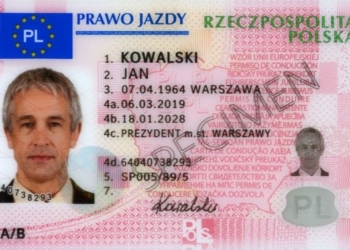
Do you want to translate Civil Status Certificates, School Certificates, car documents and driver’s licenses or other documents issued by the state organs?
If the list does not contain your document to be translated, fill up the contact form and send a scan or photo of documents to us.
Popular posts
No posts found!
Privacy & cookies
This website uses cookies
We use essential cookies to make this website work. With your consent, we may also use analytics, marketing and preference cookies to improve the website, measure performance and personalize content or advertising.